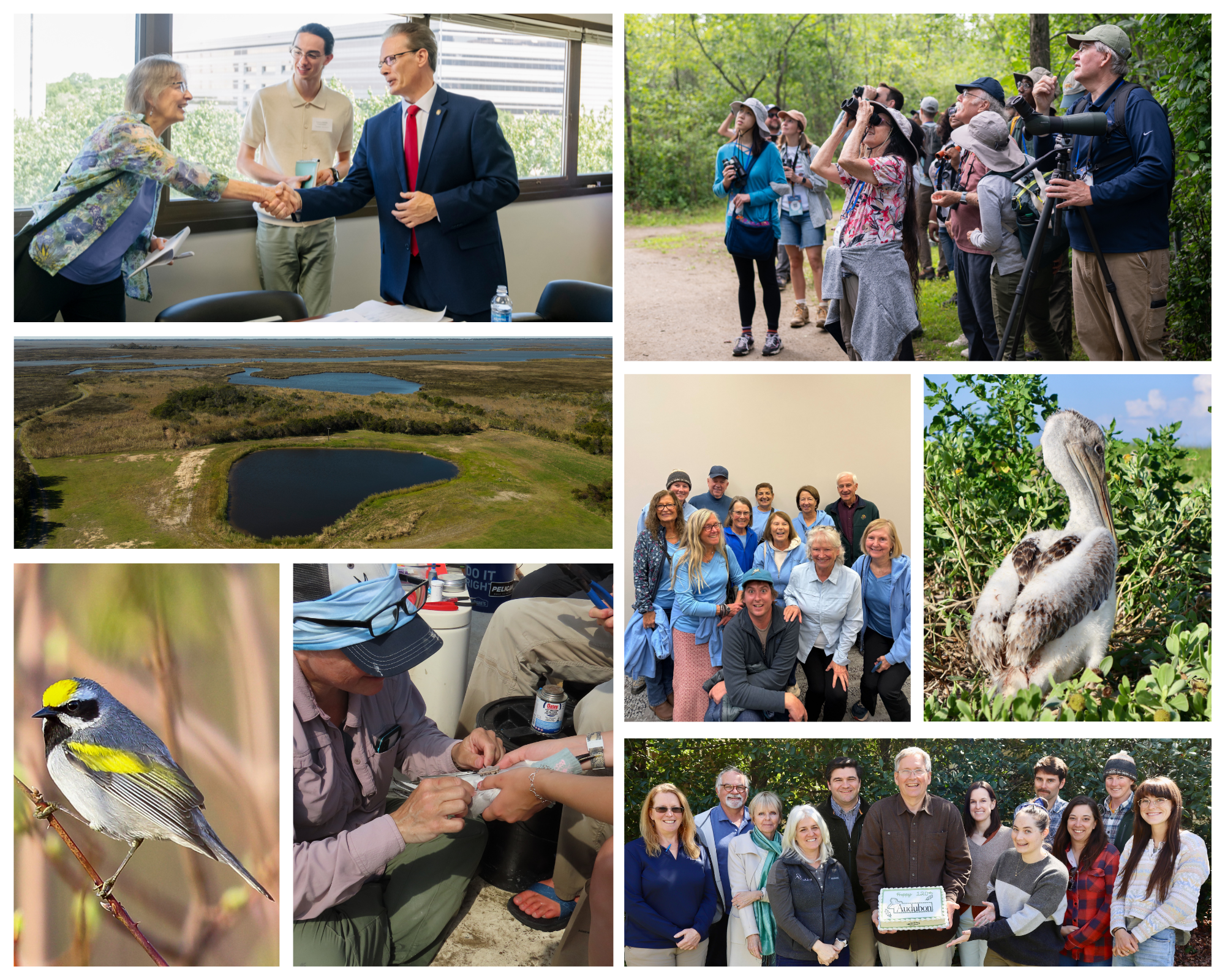
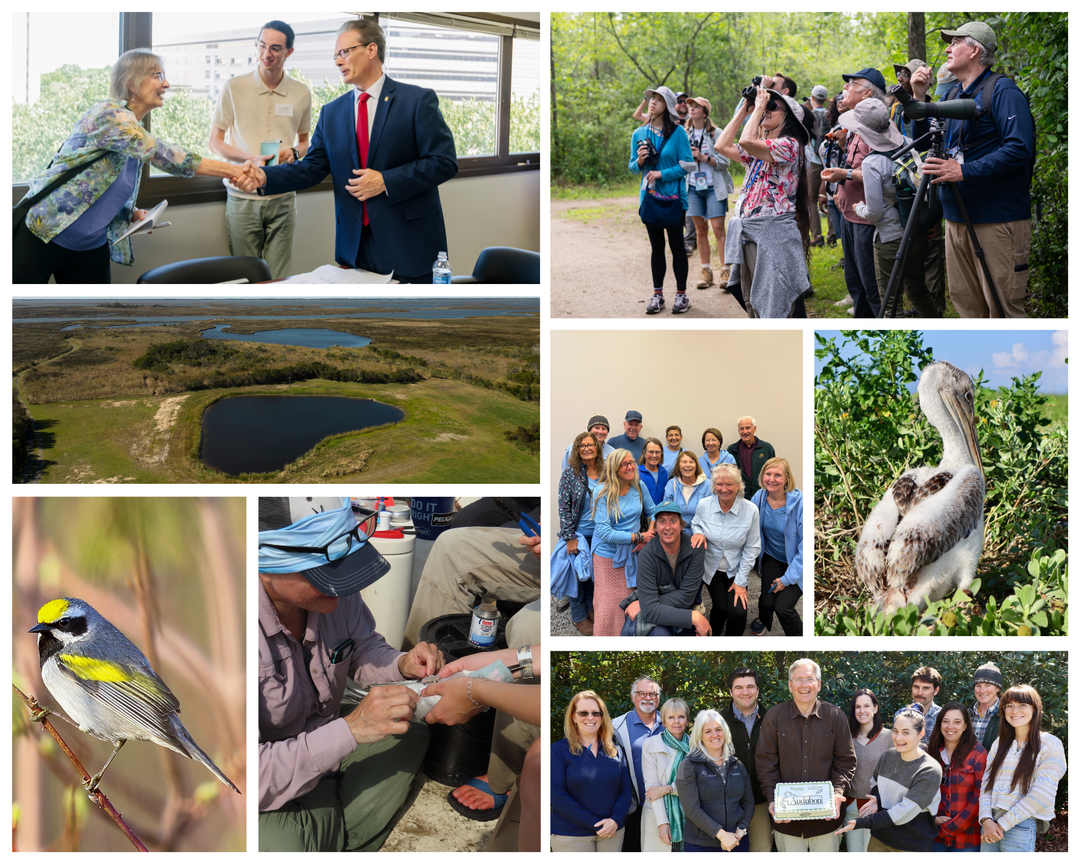
This year marked Audubon’s 120-year anniversary and the mid-point of Flight Plan—our five-year strategic plan to reverse the decline of hemispheric bird populations. Flight Plan calls for ambitious action to conserve habitat, advance clean energy and bird-friendly policies, all while growing our flock of bird advocates.
Here in North Carolina, we’ve made significant progress towards those milestones. We completed major restoration projects at our Pine Island Sanctuary on the Outer Banks, continued important bird migration research, advanced native plants policies, installed Motus towers, and so much more.
These accomplishments wouldn’t be possible without our dedicated chapters, donors, and staff, who work year-round to protect birds and the places they need. Read on for a full recap of the biggest wins for birds in 2025.
Habitat, Conservation, and Science
We had a record-breaking summer for bird banding and bird stewards on the coast, all while continuing to protect 40% of NC’s coastal nesting waterbirds
Thousands of baby birds spread their wings this summer, from remote nesting colonies in the Pamlico Sound to popular boating destination Lea-Hutaff Island, thanks to ongoing conservation and habitat management by our coastal team. We also banded the more oystercatchers and had more beach bird stewards at Wrightsville Beach than any prior year. Learn more about this year's nesting season on the North Carolina coast and all that we were able to accomplish for birds.
We installed our first Motus tower, created Black Rail habitat, and much more at our Pine Island Sanctuary
This year we launched habitat and infrastructure projects, including half a million dollars in major water, sewer, and safety improvements, and supported new research at Pine Island, all while continuing our annual bird and wildlife surveys. We conducted important bird surveys, created an oasis for Black Rails, installed the sanctuary’s first Motus tower, and welcomed back a pair of Osprey nesting on the lodge’s chimney. Get a full recap of what we’ve been up to across Pine Island’s 2,600 acres of marsh and upland maritime forest.
Our tern mapping project uncovered hemispheric connections and conservation successes
A small cohort of Royal Terns with tiny GPS data loggers on their backs returned to the Cape Fear River this spring with never-before-seen migration data. The tags were deployed by Audubon and Dr. Kate Goodenough last year and captured their journey across the hemisphere, showing all the ways that Audubon and our many partners have worked to protect the places these birds need from Colombia to the Cape Fear River. Learn where our Royal Terns spent the winter.
We restored critical habitat at the heart of Audubon’s Pine Island Sanctuary on Currituck Sound
We wrapped up a major NC Land and Water Fund-supported habitat project at the heart of our Pine Island Sanctuary on the Outer Banks. The project included restoring an old bulkheaded pond, planting native vegetation, and reconnecting an important waterway for fish and other wildlife. See how the improved habitat is already welcoming back birds.
Policy and Advocacy
Chapters and local communities advance urban forestry policy, including new bird-friendly development guidelines in Chatham County
New Hope Bird Alliance successfully advocated for bird-friendly development guidelines in Chatham County this year. The updated land-use rules will guide new construction for the next decade and include strong native tree policies, ensuring that as the community continues to grow, we can keep the health of our birds in mind. The chapter-led win is an example of the ways Audubon, our members, and our partners are advancing our new urban forestry program. Learn how this sets the stage for other chapters to get involved and check out this feature in Audubon Magazine.
We grew our flock of bird advocates and action takers, including 70 members who flocked to the NC Legislature for Advocacy Day
For the ninth year in a row, Audubon members flocked to the general assembly to lobby for birds and the places they need at Advocacy Day. The day of action was part of a year-long effort to advance conservation policy in North Carolina. Our staff and members met with lawmakers, sent emails, made phone calls, and demonstrated to elected officials that their constituents are ready to show up and speak up on behalf of birds. All told, we had more than 2,500 members take action for birds.
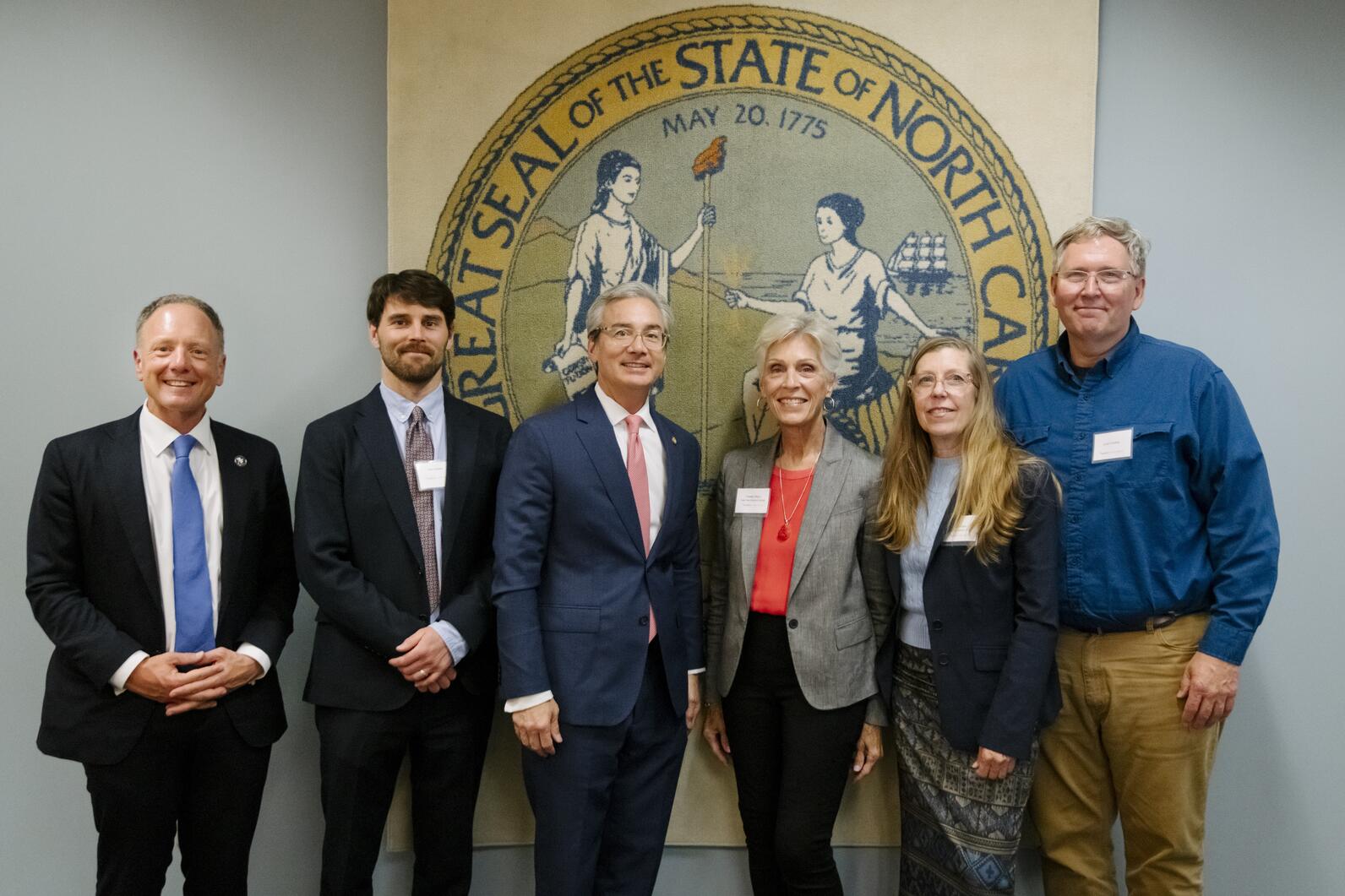
We partnered with Senator Bill Rabon to pass a bird-friendly native plant policy
Senator Bill Rabon partnered with Audubon once again to advance a suite of bird-friendly native plant policies in an omnibus bill at the NC General Assembly. Among the proposals passed in the legislation are the prohibition of mowing on NC DOT rights-of-way during the month of May to help early-season pollinators and birds as well as a mandated plan for the removal of invasive species on state parks and highways. Learn more.
We rallied Audubon members and lobbied on behalf of birds of the Cape Fear River, in the midst of the proposed Wilmington Port Expansion
A proposed expansion at the Port of Wilmington would do irreversible harm to birds and their habitat on the Cape Fear River, while bringing no economic benefits to the community. We activated more than 1,000 members to send messages to the U.S. Army Corps of Engineers urging them to consider these concerns as the project moves through the public review process. See what the river means to birds.
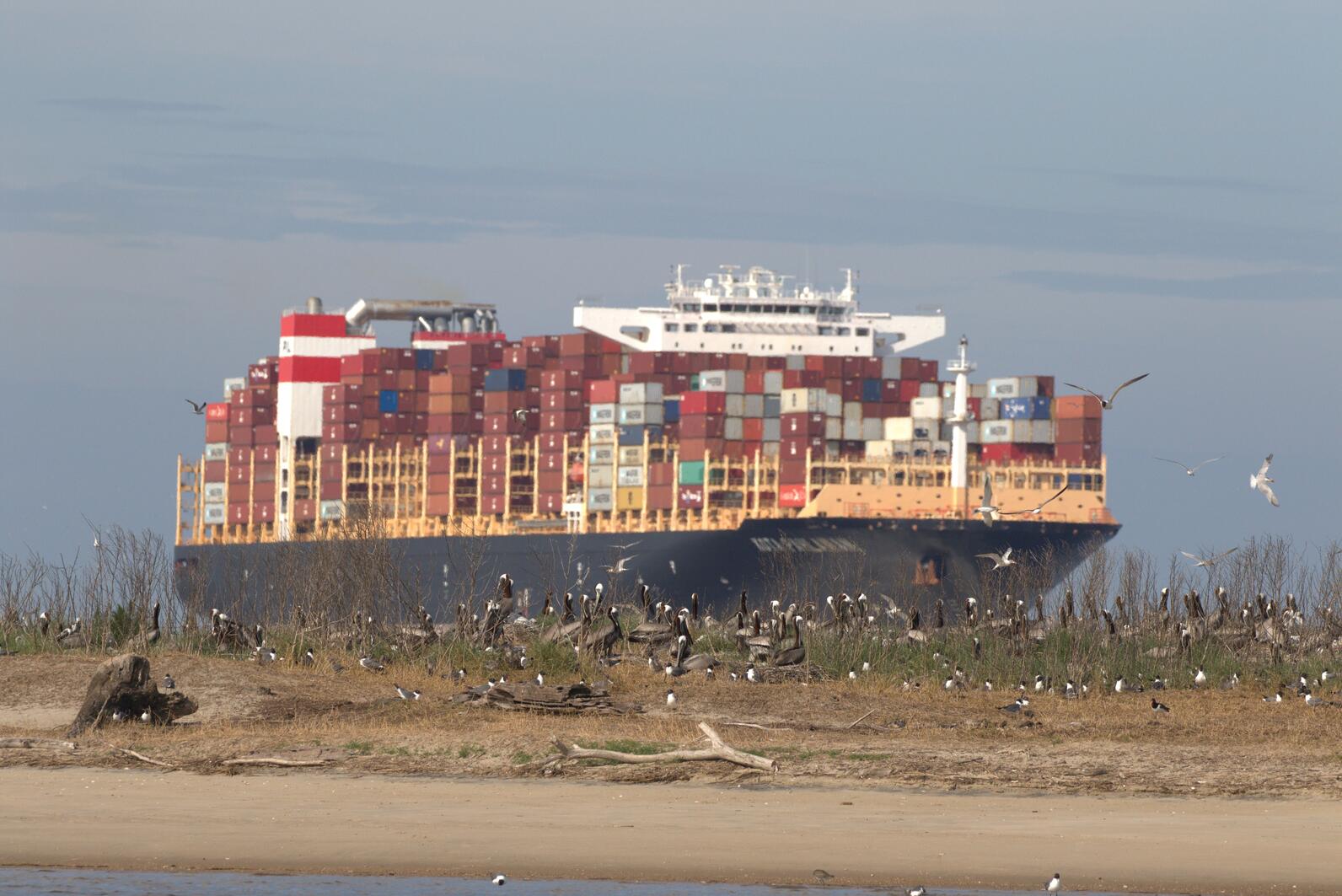
We advanced on the ground habitat protection work on the Cape Fear River
This spring we were awarded a National Fish and Wildlife Foundation grant to enhance shell rakes on the Cape Fear River. These niche habitats support about half of the American oystercatchers that nest on the river, but storms and rising tides are putting them at greater risk of flooding. Also on the river, we are wrapping up a North Carolina Land and Water Fund grant to develop a shoreline protection plan for Battery Island, which is home to one of the largest wading bird colonies in North Carolina. And, in partnership with the North Carolina Coastal Federation, we've developed test living shoreline projects for four additional sites on the river, all aimed at protecting and enhancing valuable bird nesting habitat.
Local and Community
Staff, chapters, and partners rally to rebuild, replant, and restart bird surveys after Helene
After the waters receded from Hurricane Helene last fall, Audubon chapters in western North Carolina were back on the trails and in local parks rolling up their sleeves to help clean up and replant bird habitat.
In the spring, staff traveled back into the field for our first Golden-winged Warbler surveys after the storm. Learn what the storm's impacts might mean for this declining songbird. We also worked with Grandfather Mountain to campaign on behalf of mountain communities, relaying the message that they are open for business, especially for birders. Learn more.
And in response to the needs of the region, we have received a one million dollar gift to support our work with public lands partners like state and national parks by adding a new staff position focused on public lands, supporting increased survey efforts, and more coordination with partners to deliver recovery and restoration for birds and people.
We welcomed a new Community Building Director
Dana Sargent is the newest member of the Audubon North Carolina flock, joining us as our new Community Building Director. Dana joined us from Cape Fear River Watch, where she served as Executive Director. She will work closely with our amazing chapter network and advocates across the state as we pursue policy change, clean energy progress, equitable conservation, and our legacy Bird Friendly Communities efforts. Learn more about Dana.