Many species of beach-nesting birds, like Least Terns, only nest on areas of bare sand. If vegetation overtakes these nesting areas the birds may be forced to find new places to raise their young. Recent articles in the Wilmington Star-News and the Lumina News focus on how birds (and Audubon biologists) are adapting to the changing habitat at Mason Inlet Waterbird Management Area on Wrightsville Beach.
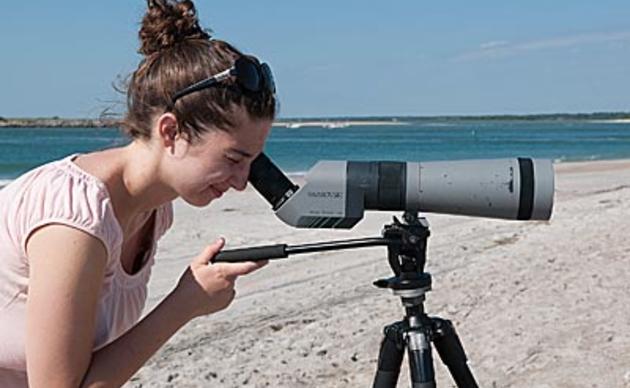
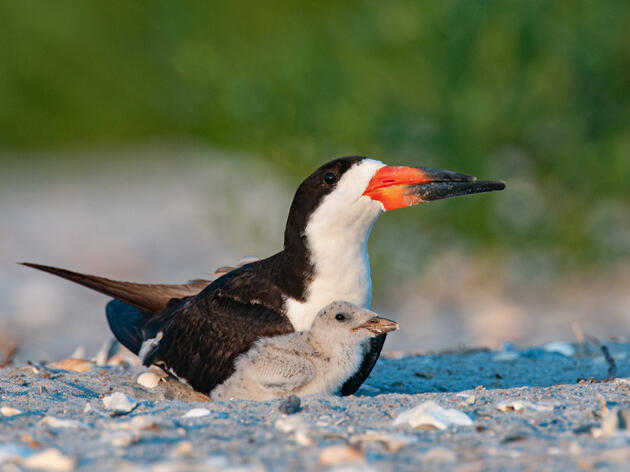
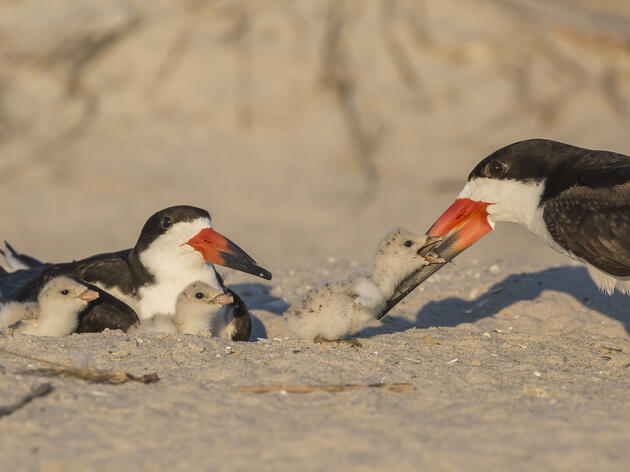
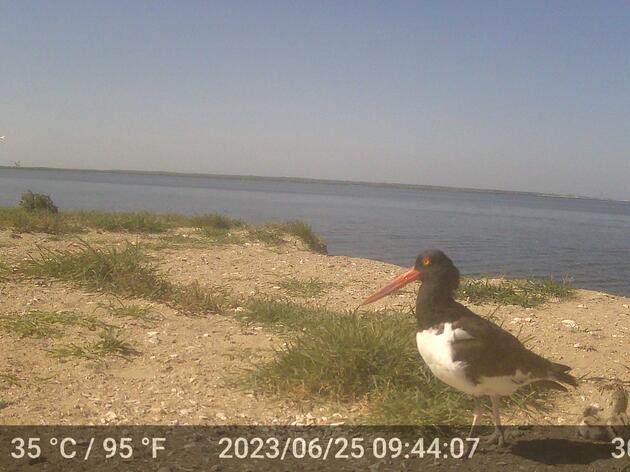
Least Terns are now nesting in great numbers at Mason Inlet Waterbird Management Area on the north end of Wrightsville beach. Audubon North Carolina biologists are offering free tours of the bird sanctuary at the north end of Wrightsville Beach every Friday at 9:00 am. The tours last about two hours, and include a hike along the protected sanctuary that serves as habitat for beach-nesting birds including Common Tern, Black Skimmer, American Oystercatcher, Wilson’s plover and other unique coastal birds. Mason Inlet is home to the largest beach-nesting colony of least terns in the state.
The best way to keep up with the latest news from Audubon North Carolina is to join our online community. Online community members have the option of receiving any or all of the following e-publications: NC and national action alerts and the Audubon NC monthly e-newsletter. Signing up is easy! Just visit the Audubon North Carolina Action Center .
Audubon North Carolina is interested in finding out how we can best communicate with our 10,000 supporters in the state. If you are a current member of Audubon North Carolina we hope you will take a few minutes to take our online survey about your membership in the National Audubon Society and the communications efforts of Audubon North Carolina. This is the same survey that appears in our Spring/Summer 09 newsletter, so we're offering this online version as an alternative to the print piece.
Environmental Education Under Attack in North Carolina
The ongoing North Carolina budget debate includes a recommendation to eliminate the NC Office of Environmental Education. This award-winning office is recognized as one of the strongest in the country. At a time when "nature deficit disorder" is running rampant, we can not afford to lose the foundation of environmental education in North Carolina.
We enlisted our supporters’ help in 2008 in fighting a misguided maneuver to overturn protective measures at Cape Hatteras National Seashore on the Outer Banks. Unfortunately, the threat is back and we need your help once again.
Audubon North Carolina’s involvement in Nicaraguan conservation and sustainability projects grew out of the need to address the challenges that neotropical migratory birds face on both their breeding and wintering grounds.